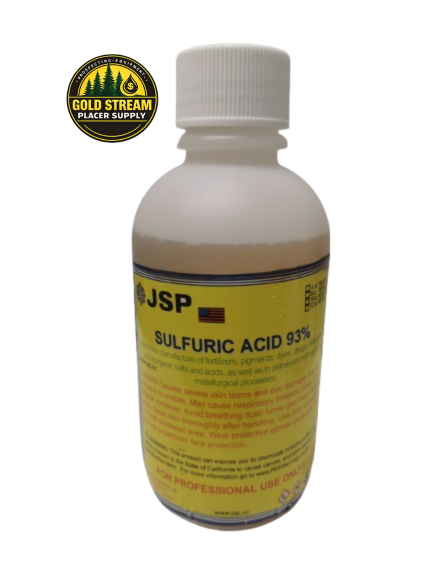
Sulfuric Acid 93% 16 oz. While sulfuric acid cannot dissolve gold on its own, it is indispensable in gold recovery for the preparation of aqua. regia. Sulfuric acid effectively removes base metals like copper, zinc, and iron from gold-containing materials, helping to purify the gold. For example, in alloy refining, hot concentrated sulfuric acid dissolves silver and base metals while leaving gold intact. In refractory gold ores, concentrated sulfuric acid is used to oxidize and decompose sulfide minerals (like pyrite and arsenopyrite), exposing encapsulated gold particles.
Sulfuric acid is a highly corrosive and hazardous chemical that poses severe risks to health, safety, and the environment.It can cause immediate and severe burns to skin and eyes, potentially leading to permanent blindness or irreversible tissue damage. Inhalation of its fumes or mists can result in serious lung damage, chemical pneumonitis, pulmonary edema, and respiratory failure, with symptoms sometimes delayed. Ingestion may cause internal burns, gastric perforation, circulatory collapse, and death, even in small amounts.
PN: GT424
Key Safety Warnings:
-
Reacts violently with water, releasing intense heat that can cause splattering and burns.
-
Corrosive to metals, organic materials, and most common chemicals—avoid contact with water, strong bases, reducing agents, carbonates, sulfides, and cyanides.
-
Strong inorganic acid mists are classified as carcinogenic (e.g., ACGIH A2 category), increasing cancer risk with long-term exposure.
-
Highly toxic—fatal in small quantities; even a few drops in the trachea can be deadly.
Critical Safety Measures:
-
Always wear proper PPE: chemical splash goggles, face shield, neoprene or Viton gloves, and acid-resistant apron/clothing.
-
Handle only in well-ventilated areas or outdoors—never in enclosed spaces.
-
Store in a locked, corrosion-resistant container with a resistant inner liner, away from incompatible substances.
-
In case of exposure:
-
Eyes: Rinse with water for at least 15 minutes; remove contact lenses if present. Seek immediate medical help.
-
Skin: Remove contaminated clothing immediately and rinse under water for at least 15 minutes. Call a physician.
-
Inhalation: Move to fresh air. Administer oxygen if breathing is difficult. Contact emergency services.
-
Ingestion: Do not induce vomiting. Rinse mouth and drink water (2 glasses max). Seek emergency medical care immediately.
-
Never use water to extinguish a fire involving sulfuric acid—it may cause violent reactions. Use dry chemical, carbon dioxide, or alcohol-resistant foam. Always keep emergency numbers accessible.