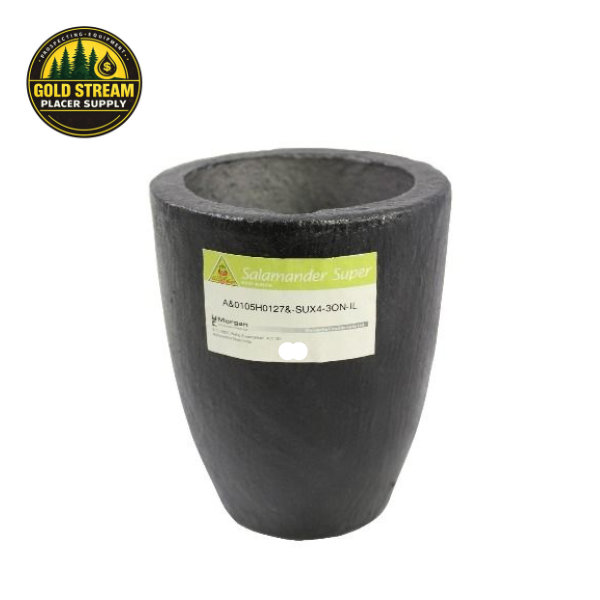
Salamander super crucible a 1/0.
PN: OV200
- .56kg capacity
- Salamander SUPER Clay-Graphite Crucible A-1/0 a high quality ceramic bonded clay graphite crucible manufactured by plastic forming techniques.. Crucibles are used to melt various metals, and provide consistent performance in fuel-fired furnaces and medium / high frequency induction furnaces.
- Salamander Super A Crucibles are for use with Non Ferrous Metals.
- TYPICAL METAL CASTING TEMPERATURE: 1562-2912°F / 850-1600°C
- Top Diameter: 60 mm.Height: 67 mm.Bottom Diameter: 41 mm.
- Salamander Graphite crucibles are high quality melting crucibles. They can be used at temperatures up to 1600°C (2900°F) and are suitable for melting and refining precious metals, base metals, and other products.Performance Characteristics
Clean melting
Good thermal conductivity
Good resistance to chemical corrosion
High refractorinessUse proper flux, and be sure to preheat the crucible prior to the first use to drive off any residual or accumulated moisture.It is helpful to preheat crucibles to drive of any moisture that may have been pulled out of the atmosphere during manufacturing, storage, shipping, and cooling from the previous firing. And for high value fires (like refining), it is good insurance.Coating the inside of the crucible probably does not help. If you want to coat the inside of the crucible with borax, go ahead as it probably will not hurt anything. But, the borax is a low melting temperature component so the coating will not form much of a barrier after you start heating things up. And, it may “cost” you one of the fires.
Some people do some refining in assay crucibles. The fire clay used in assay crucibles is not rated for nearly as high of temperatures as graphite or silicon carbide, and this is not really recommended. But, if you have had success doing this, make sure and preheat the crucible before use (as mentioned above).
Preheating can be done by placing the crucible on top of the furnace, or on a hot plate, or by putting them in the furnace and raising the temperature slowly.